
Picture early medieval England, the part before anyone had a last name or a functioning immune system. The sun is barely awake, the fog is doing ambience, and out from the thatch-roofed settlement come the men: spears, tunics, the works. This is their folkmoot, the closest thing the Anglo-Saxons have to a political institution, a parliament. They gather in a ring to decide taxes, settle blood-price disputes, and vote on whether the local thegn is still tolerable.
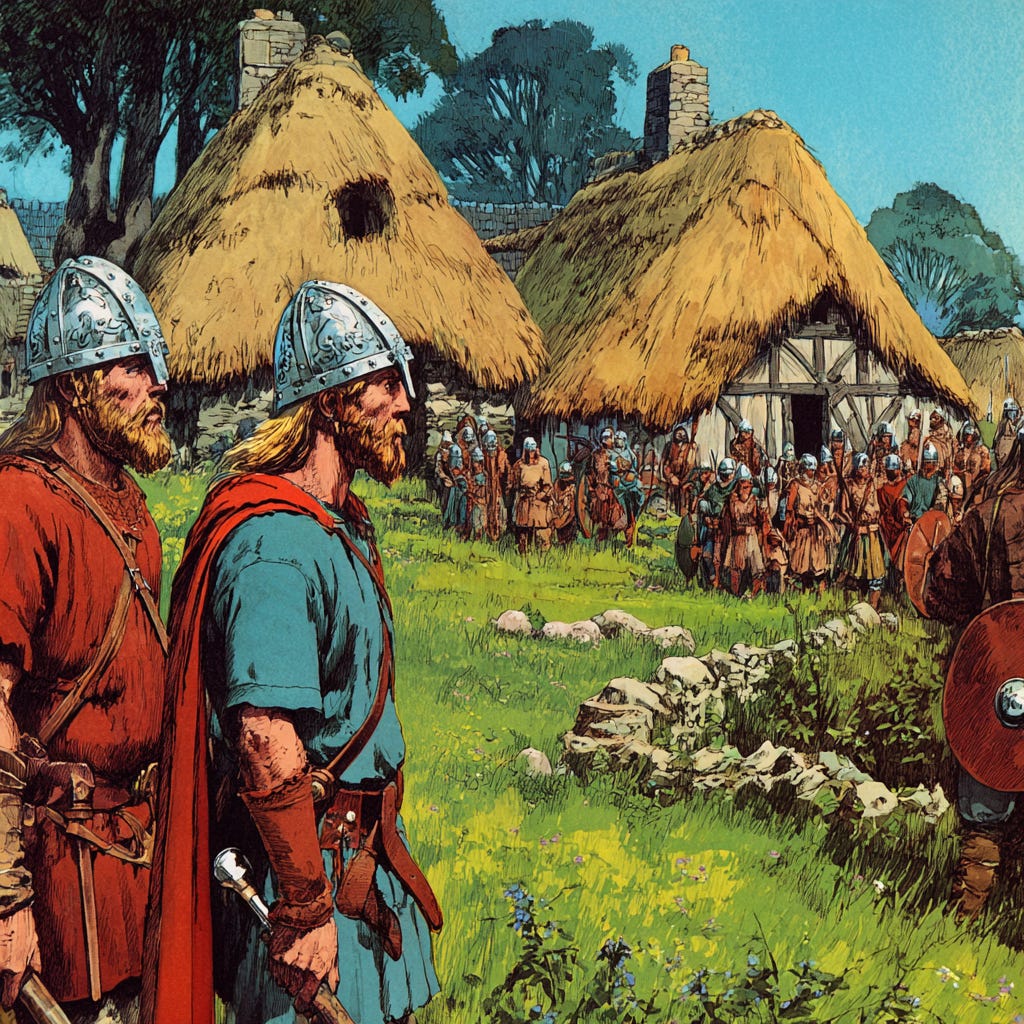
There’s something comforting about the Anglo-Saxon democracy origin story. You have cottagecore England, thatched roofs, and based Saxon warriors gathering under sacred oak trees giving each other the ancient equivalent of upvotes by clashing their spears. It’s this idea that democracy was an authentic homegrown English product, not some continental import reeking of guillotines and sans-culottes, but something that emerges organically from the Volk like sourdough starter or seasonal depression.
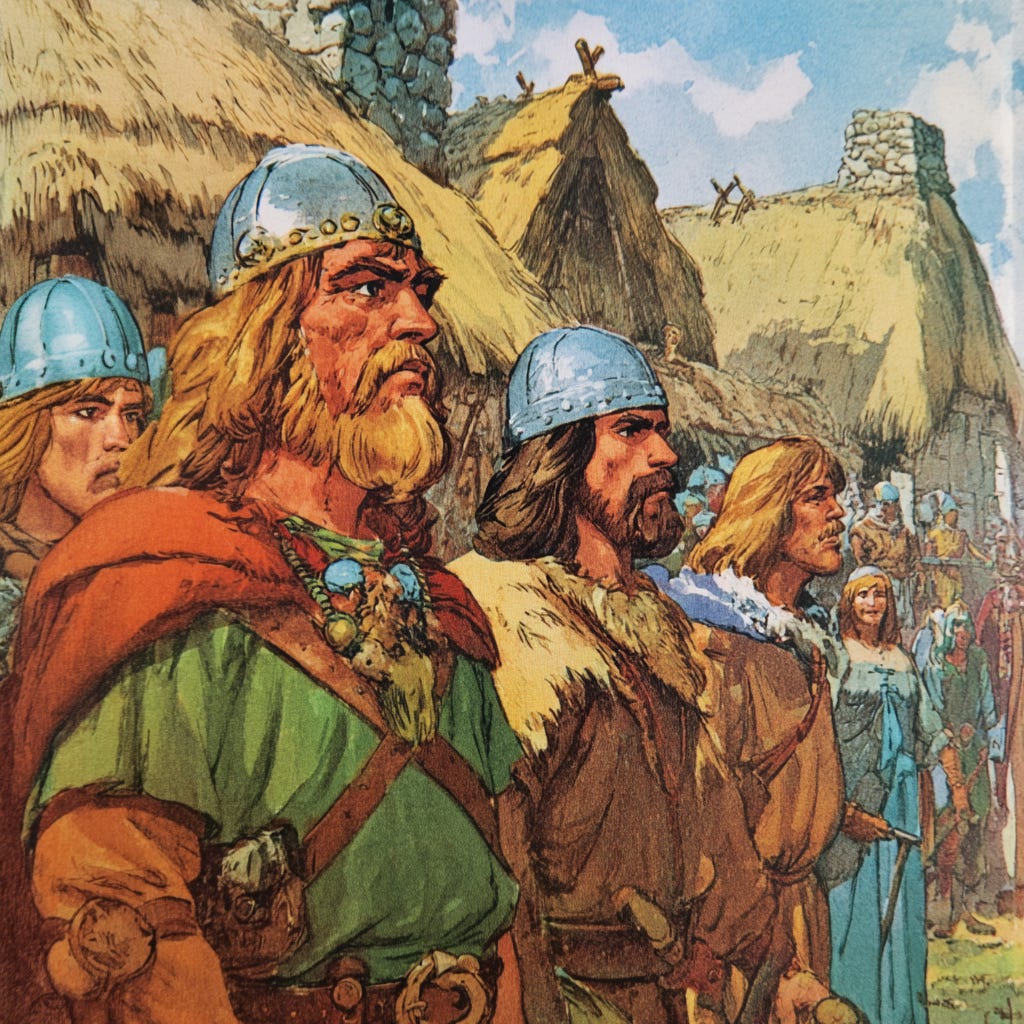
Edward Augustus Freeman, the Victorian historian, once wrote that “The life of our own Constitution, in its original elements, goes back to times which we have no record to measure.” For Freeman, the narrative was clean: Saxon freemen assembled in their village moots to determine community affairs through vibes-based consensus, and this would eventually evolve through Parliament, through the Magna Carts, and through the long psychodrama against Norman tyranny, into modern British democracy. Jefferson posted about “Saxon liberties” to justify the Revolution. Churchill traced the “English-speaking peoples” back to Germanic tribes. The story made democracy feel inevitable, organic, ontologically ours.
Except it wasn’t entirely true.
This narrative first came from English Civil War radicals like the Levellers who needed to delegitimize the monarchy. Their move was clever: reframe the Norman Conquest of 1066 as the original stolen election. The story goes: before William the Conqueror, England was a workers’ paradise of Saxon liberty. Then the Normans imposed feudalism and aristocratic tyranny, destroying native English freedom. The “Norman Yoke” theory made revolution sound like restoration.
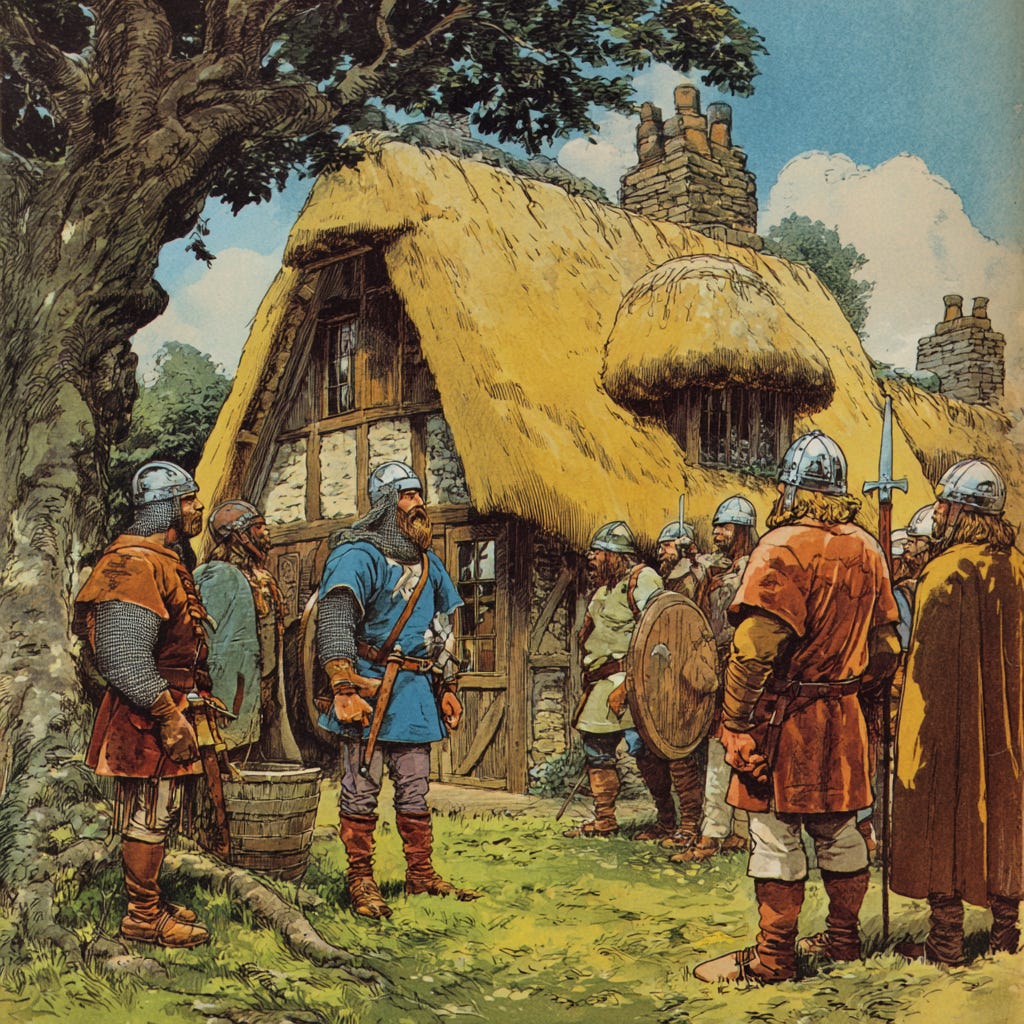
The Empire needed justification too. Americans ate this up. New England town meetings were Saxon moots, making American democracy ancient English heritage instead of French Revolutionary slop.
Victorian scholars built entire disciplines around this grift. Freeman and J.R. Green wrote thousand-page histories presenting Saxon England as the golden age before the Fall. This was peer-reviewed, taught at Oxford, and repeated in textbooks.
In reality, Norman administration replaced Saxon structures completely. You could call it a ‘Hard Reset’. The witan just disappeared. Local assemblies got subordinated to Norman manorial courts. When Parliament emerged in the 13th century, nobody was doing a Saxon callback. They were operating in pure feudal logic where kings needed money and feudal custom said vassals owed counsel and consent regarding taxation. Parliament was feudalism’s way of extracting surplus value with extra steps, modeled partly on French parliament traditions.
There is no line from Saxon moots to Westminster. The whole story is Victorian fanfiction that somehow became canon.
But behind fan-fiction, lies an even wilder true story.
You see, Saxon assemblies of free men do look suspiciously similar to assemblies in classical Greek city-states:
