
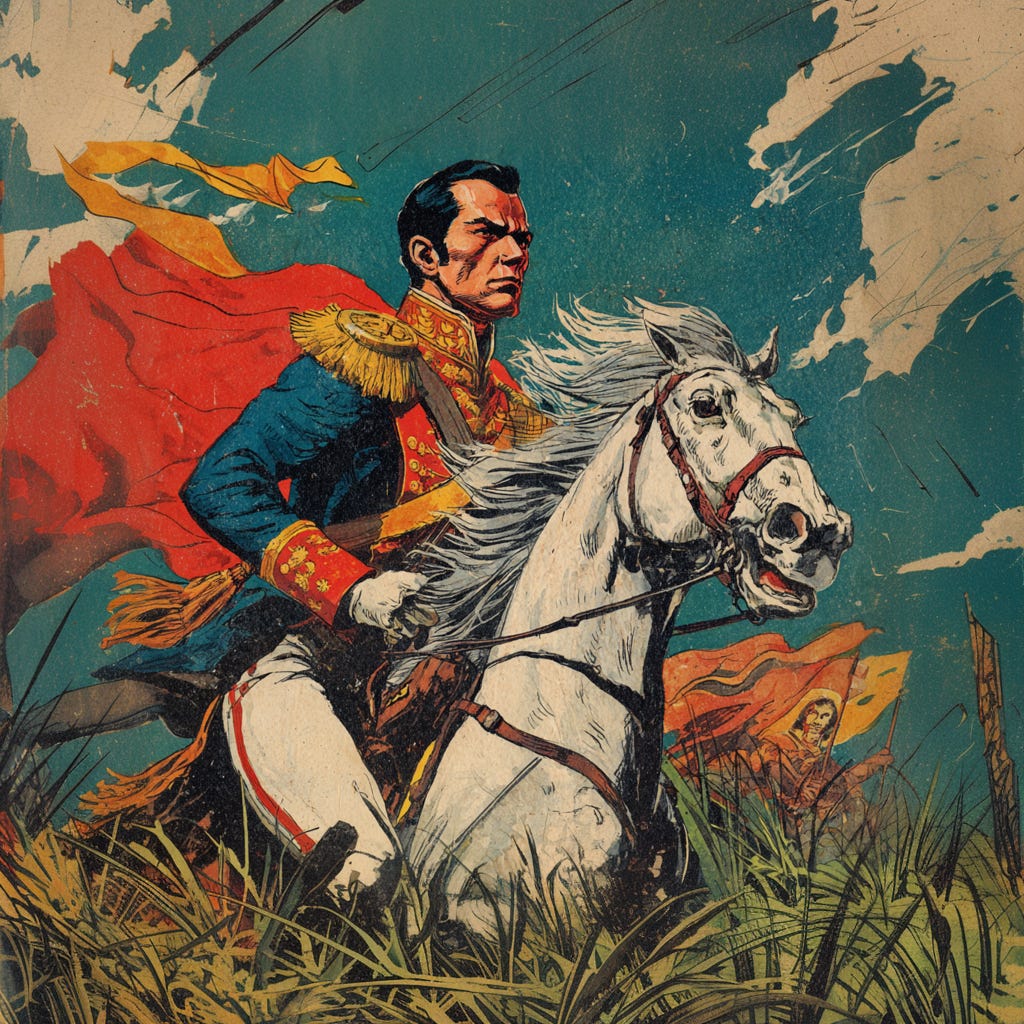
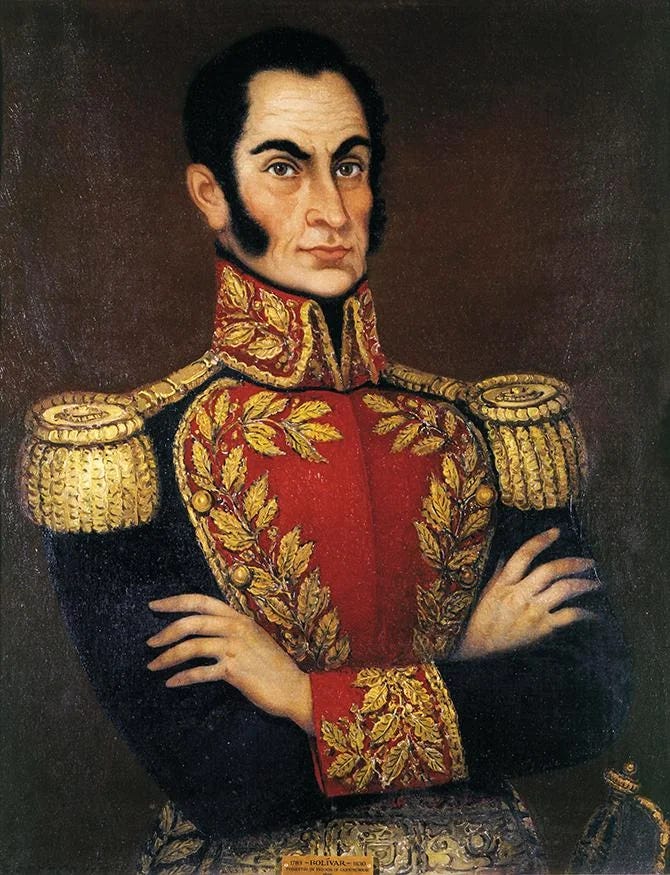
It’s December 1830, Santa Marta, Colombia. Simón Bolívar: the Grand Liberator, the man who freed half a continent from Spanish rule, is dying in a borrowed nightie in someone else’s house. He’s 47 but looks 70, ravaged by tuberculosis and bitterness. The man who led armies across the Andes, who liberated Venezuela, Colombia, Ecuador, Peru, and Bolivia, owns nothing. Not a house, not land, not even the shirt on his back. His dream of ‘Gran Colombia’ (a unified South American federation that could stand against empires) is already fracturing into a bunch of bickering banana republics before his eyes: Venezuela, Colombia and Ecuador. Like a polycule exploding after someone screenshots the group chat.
In his final days, he delivers what might be the most devastating political epitaph in history: “Those who have served the revolution have ploughed the sea.”
Futility. Wasted effort. You can’t plough the ocean. The conventional reading: Latin American political chaos makes nation-building impossible, revolution is inherently doomed, the dream of independent republics was always cope.
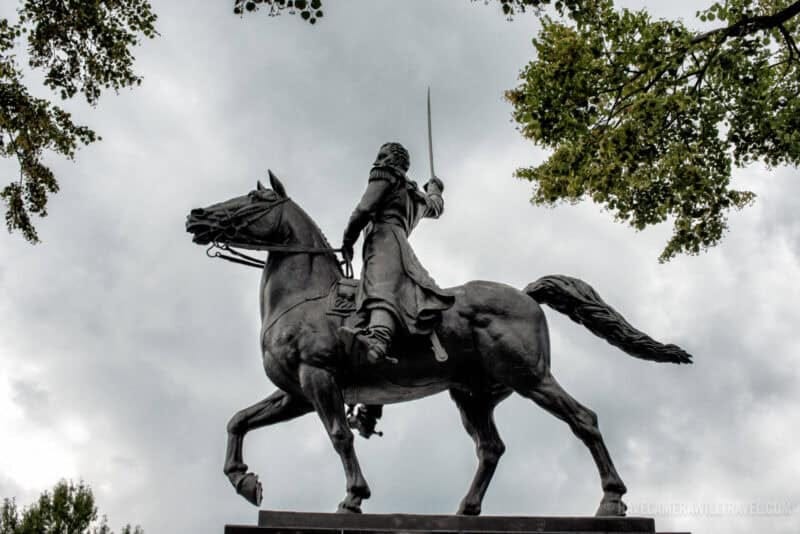
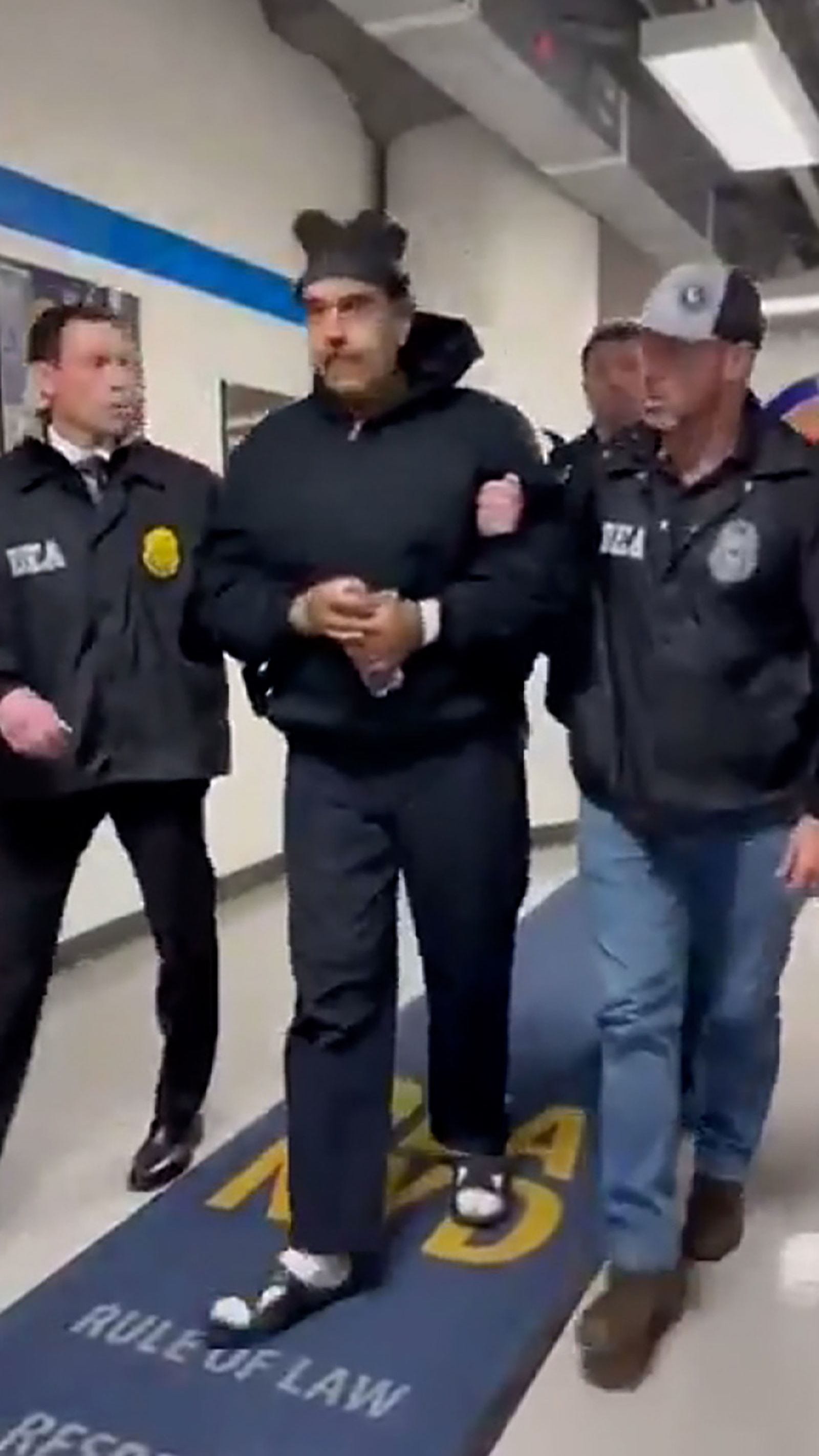
Fast-forward to January 3, 2026. US military rolls into Caracas like it’s Uber Eats. Maduro and his Botoxed wife get snatched, zip-tied, flown to some carrier (USS Iwo Jima, lol), then perp-walked in Brooklyn on narcoterrorism charges. The Bolivarian Republic of Venezuela—named after the guy who croaked in that thrift-store nightgown—just got its prez kidnapped by gringos. Again.
Nixon bombed Cambodia for four years in secret. Kissinger destabilized entire governments through 17 layers of CIA cutouts and still denied it under oath. Trump literally live tweets ‘WE GOT HIM!’ with a photo of Maduro’s Perp Walk. The hegemony got tired of the kayfabe and just started saying the quiet part at stadium volume. Kind of refreshing, in a psychotic way.
But here’s the thing that should make you uneasy: What if Bolívar wasn’t wrong? What if he clocked something everyone else has spent 200 years refusing to acknowledge?

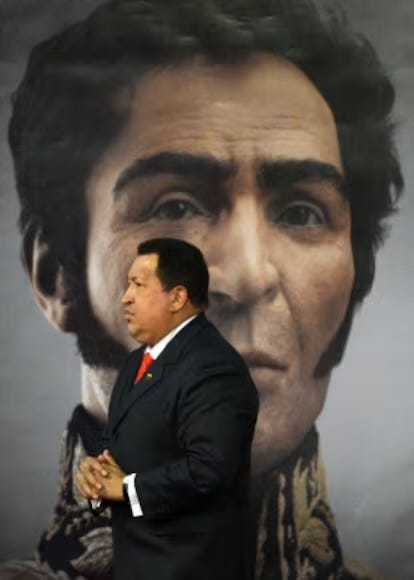
Hugo Chávez took power in Venezuela in 1998 with Bolívar’s name on his lips. It wasn’t a subtle homage. He renamed the country the “Bolivarian Republic of Venezuela.” He launched the “Bolivarian Revolution.” He invoked Bolívar in nearly every speech. He recycled the whole revolutionary aesthetic. He even digs up Bolívar’s bones for a fancy new tomb because why not add necromancy to your cult starter pack? The symbolism was unambiguous: we’re completing the liberation project. No more yankee bootlicking!
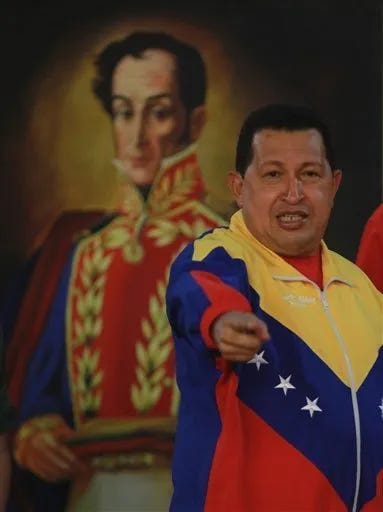
Nicolás Maduro inherited this entire ideological framework when Chávez died in 2013. Less charismatic, significantly less competent, basically if you ordered a knockoff Chávez from Temu. For two decades, Venezuela positioned itself as the modern inheritor of Bolívar’s vision—genuine independence, Latin American unity, freedom from foreign domination.
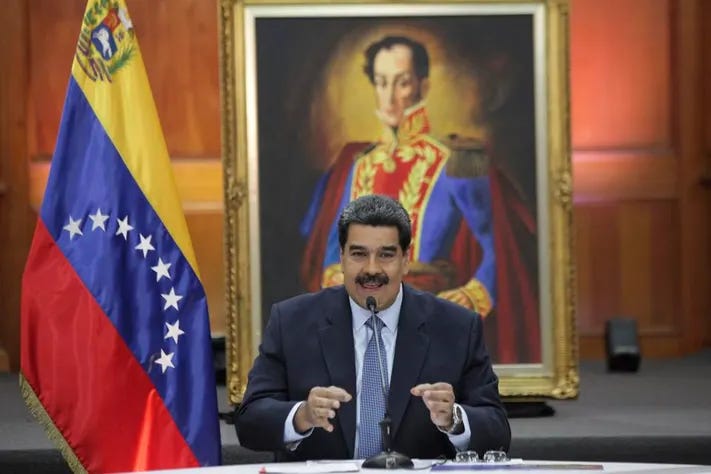
And throughout all of this—all twenty-six years of Bolivarian rhetoric—there were US sanctions, US pressure, constant American involvement. It wasn’t 200 years of independence followed by intervention. It was 200 years of continuous intervention with different justifications, different legal frameworks, but the same underlying dynamic.
The “resistance” was always happening within American parameters. The “independence” was always conditional. The “sovereignty” was always with an asterisk. Which raises the question: What was Bolívar actually observing when he said “ploughed the sea”?
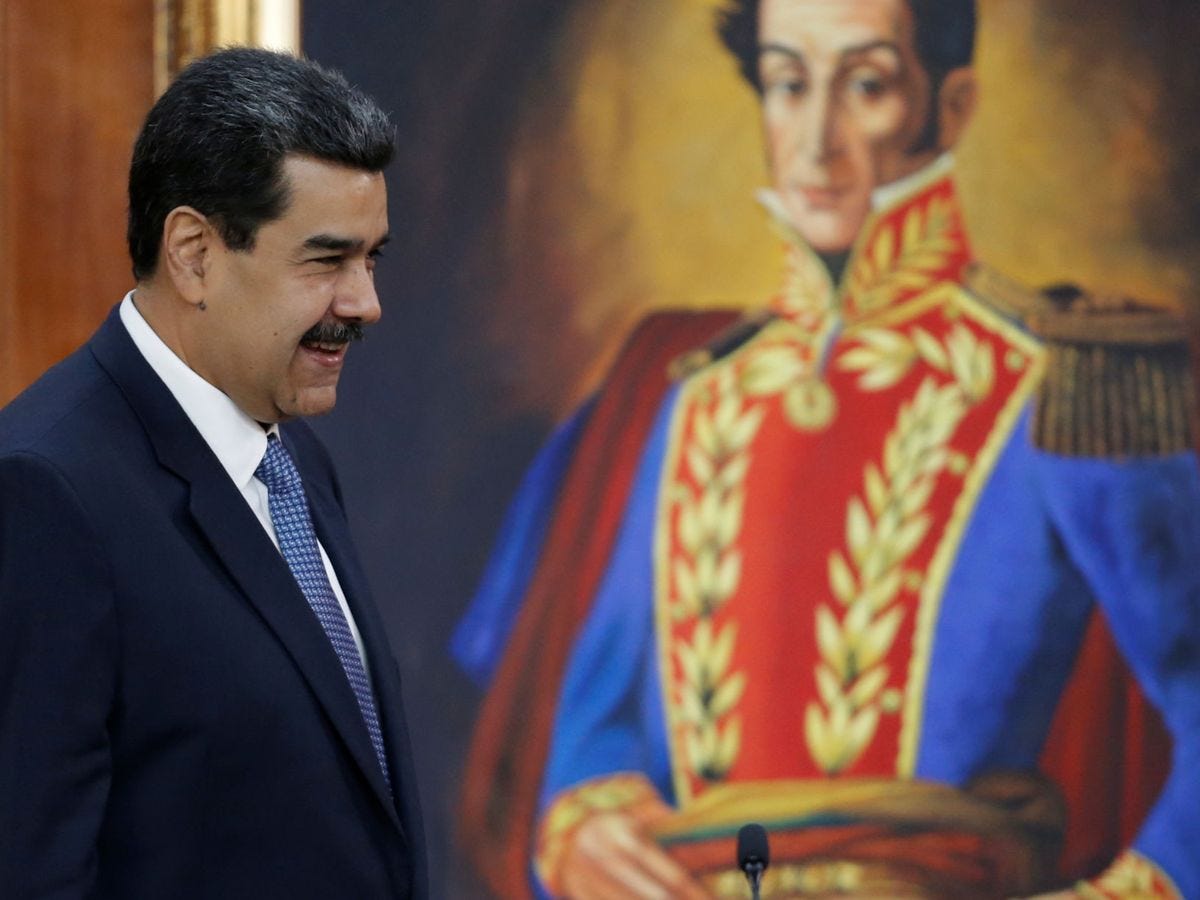
It turns out Bolivar lived just long enough to see the Monroe Doctrine.
Proclaimed by US President James Monroe in 1823, seven years before Bolívar’s death, the Monroe Doctrine announced to the world that “the Americas” were henceforth the United States’ sphere of influence. European powers should stay out. The Western Hemisphere belonged to “the Americans, meaning, not ambiguously, to the USA. It’s the geopolitical equivalent of “I’m not like other empires, I’m a cool empire.”
Here’s what Bolívar figured out, what his final words suggest he understood: The sea he was trying to plough wasn’t Latin American political chaos or instability or the supposed incapacity for self-governance.
The sea was American power.
You cannot build sovereign structures when you’re swimming in someone else’s pool. You cannot establish genuine independence when a hemispheric hegemon has declared your entire region its strategic backyard. You can call yourself independent, write constitutions, elect presidents, raise armies. But you’re still swimming in yankee waters.
The pattern since 1823 has been remarkably consistent. Every Latin American government that has attempted to chart a course genuinely independent of US interests has faced consequences. Guatemala, 1954: democratically elected government attempting land reform, overthrown by CIA-backed coup. Chile, 1973: socialist government nationalized copper, military coup backed by American intelligence on September 11th (yes, that September 11th, before it rebranded). Nicaragua throughout the 1980s: Sandinista revolution, Contra war funded by the United States. The justifications change—anti-communism, democracy promotion, drug war—but the constraint remains constant.
Step outside US interests, get slapped. This isn’t conspiracy theory, this is documented historical pattern. The sea is the sea.
Gran Colombia didn’t fracture because Latin Americans were incapable of building stable institutions (the racist cope that justified a century of intervention). It fractured because you cannot build independent power structures in waters controlled by a hemispheric hegemon. Bolívar died understanding this. His revolution hadn’t failed because of his mistakes. It had encountered an immovable obstacle: American hegemonic power in the Western Hemisphere.
Two hundred years later, Maduro, invoking Bolívar’s name, flying the Bolivarian flag, running the Bolivarian Republic, gets literally kidnapped by the US military.
Still in the same ocean. Still trying to plough the sea. Still drowning.
Ok, but why now? Why January 2026?
Is it just to get the oil?
It’s true that Venezuela sits on 303 billion barrels of proven oil reserves. The largest in the world. More than Saudi Arabia. More than anyone. Worth approximately $17 trillion at current prices.
Every government that has controlled Venezuela, regardless of ideology, has existed to extract and sell this oil. Chávez nationalized the industry with great anti-capitalist fanfare, still sold oil. Maduro controls it while wearing tracksuits and ranting about economic sabotage, still sells oil. Whatever comes next will extract and sell oil.
But it still doesn’t answer the question of why now. The oil has been there forever. Maduro’s been cosplaying Bolivar for over a decade, and before him Chavez was cosplaying Bolivar for another two decades. The election fraud isn’t new—he’s been doing that since 2013. The drug trafficking networks aren’t new either. Venezuela’s been a narco-state for years. It’s been a ‘Bolivarian Republic’ since the late 90’s.
So why did this intervention happen NOW? What changed in 2025-2026 that made this the moment?
The answer is hiding in plain sight, and it’s weirder and more dystopian than you think.
