
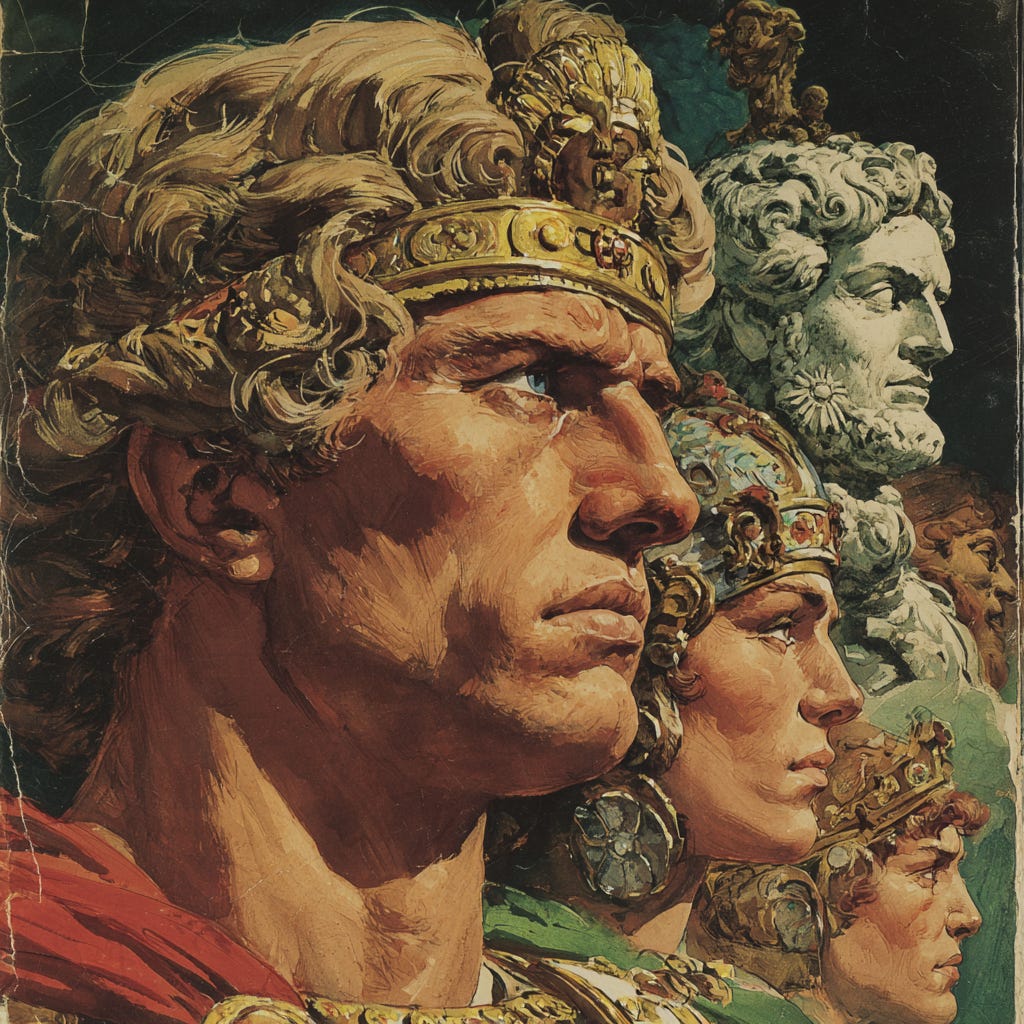
It’s December 362 CE, Constantinople. The imperial palace is buzzing with excitement that hasn’t been felt in decades. Emperor Julian, 31 years old, philosophy-pilled since his student days in Athens, secretly pagan his entire adult life, sits surrounded by a dream team of pagan intellectuals. They’re planning the restoration of paganism across the Roman Empire.
Constantine had made Christianity the state religion fifty years prior. Now that he was dead, his nephew Julian believed he was going to save Rome from what he perceived as this Middle Eastern death cult that’s somehow ate the empire.
Julian has a plan. Actually, he has the plan. Redirect state funding from churches back to temples. Build pagan charitable networks to compete with Christian social services. Reorganize the priesthood. Ban Christians from teaching classics if they think Homer and Virgil are demonic. It’s a sophisticated plan. He has imperial power, military backing, intellectual superiority, and popular support. Christianity has only been legal for fifty years. People still remember the old gods.
Control the discourse, rebuild the infrastructure, restore the funding. Simple. Elegant. Achievable.
On paper, this is the easiest layup in Roman history.
Two years later, Julian would be dead in Persia with a spear through his liver, and the pagan restoration would die with him. His successor Jovian, reversed all his policies before Julian’s corpse had achieved room temperature. Within a decade, Christianity was mandatory. Within thirty years, paganism was illegal, and pagan temples were rubble.
How could Julian fail? He had every possible advantage. Imperial power. Intellectual superiority. Military strength. Popular support. A brilliant strategy. A Roman Emperor with the backing of all of the state’s might.
And he got absolutely destroyed.
Which means he wasn’t fighting what everyone thinks he was fighting.
What was he fighting? If you think the answer is “Christianity had better ideas” or “people preferred monotheism” or “Jesus is Lord and truth prevails,” I have some extremely uncomfortable news about how power actually works, how cultures actually change.
It applies yesterday, today, and tomorrow. Once you see it, you cannot unsee it.
Why did Julian fail? The answer will make you rethink every comfortable narrative about truth and ideas and the arc of history. Because none of those things mattered.
What matters is something darker and far more sinister.
