
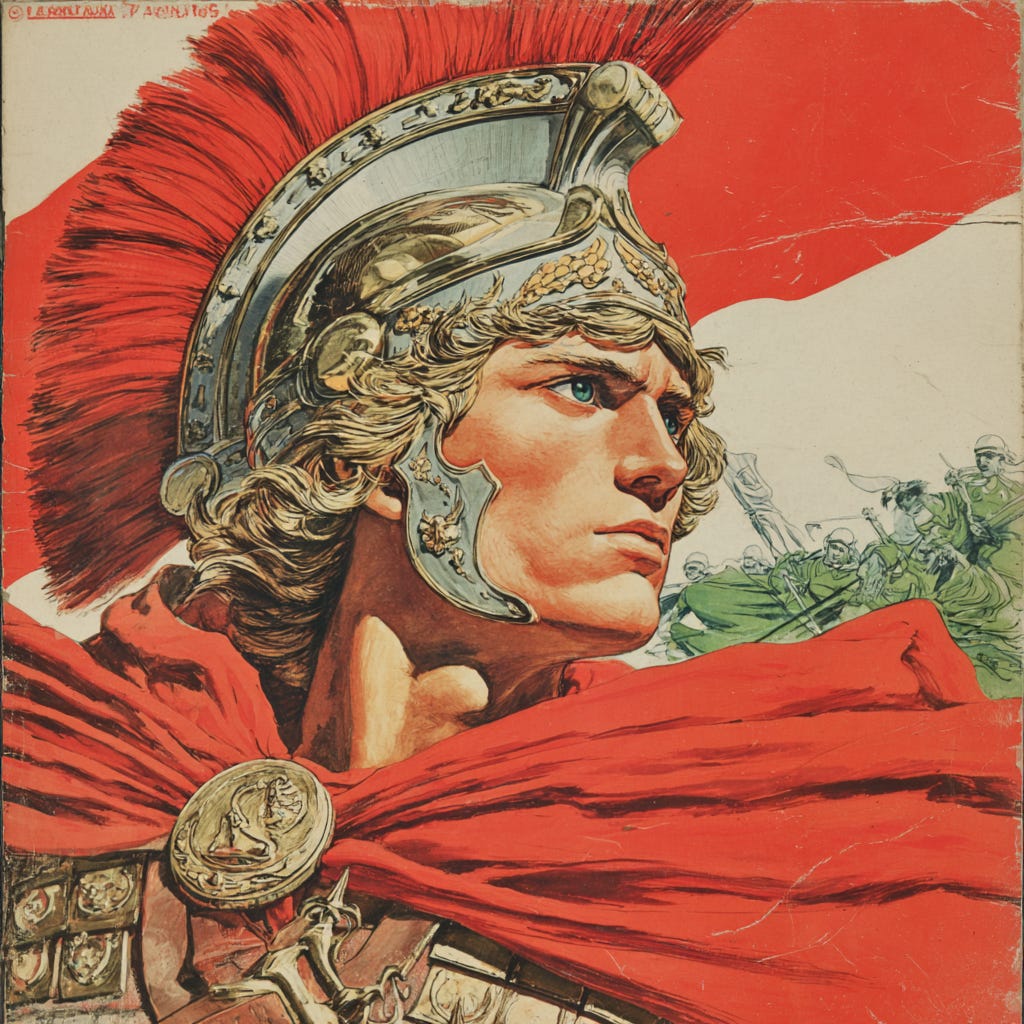
It’s June 323 BCE in Babylon. Alexander the Great, all of thirty-two and looking like a Greek god who’s just discovered the joys of dysentery, is croaking in some sweat-soaked palace suite that reeks of empire-sized regrets and the faint whiff of arsenic. His generals (essentially a bunch of extremely violent frat brothers) crowd around his deathbed. Someone asks where he wants to be buried. Macedonia, he whispers. The homeland. Something appropriately dignified for someone who conquered everything from Greece to India.
The generals nod solemnly. Plans are made. A golden sarcophagus is commissioned. A massive cortege will carry him home from Babylon to Macedonia in a funeral procession that’s basically Coachella on wheels, snaking across the empire he glued together with blood and sheer delusion. This is how god-kings are supposed to exit: with ceremony, with dignity, with closure.
This should have been straightforward.
Reader, it was not straightforward.
Instead what follows is possibly the most deranged corpse odyssey in human history. A 2,300-year saga of body-snatching, mistaken identity, and the absolute cosmic joke that nobody (including history’s greatest conqueror) can control what happens to their corpse once they’re dead.
So, 321 BCE: The funeral train rolls out of Babylon, headed for Macedonia.
It never makes it.
